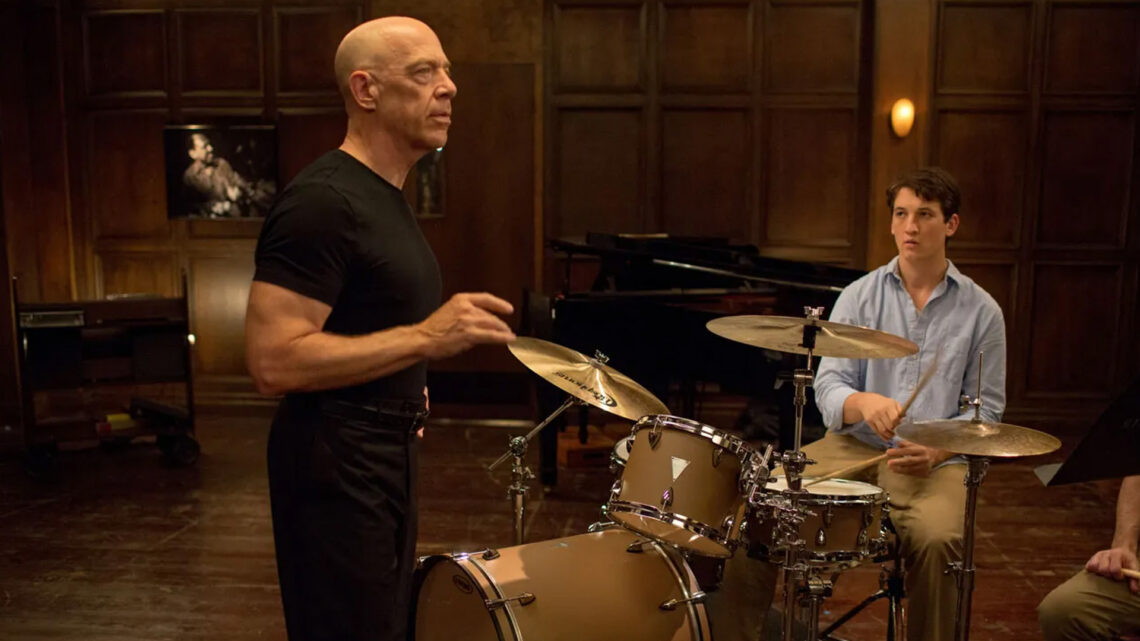

Almost every filmmaker has the same strategy when it comes to short filmmaking – Use it as a proof of concept for a feature.
On paper, it sounds good.
We’ve seen it work on the highest levels of Hollywood. Look no further than a film like Whiplash as evidence.
But for every Whiplash, there are thousands of shorts made with this strategy that never manifest as feature films.
And I would argue that 90% of the time, your short film is actually less likely to get made into a feature if that’s the goal to begin with.
A film like Whiplash is the exception.
The feature was already written, one of the scenes clearly worked as a standalone short (most do not), and the director (Damien Chazelle) was already repped by a major agency with festival connections.
If that’s the hand you’re playing, of course it’s a smart move to make a short that can help you secure financing.
But the average filmmaker is working under a very different set of circumstances. Yet still, they hear stories like this and decide to formulate a similar business model for themselves:
“I have an idea for this awesome feature, and it could sort of work as a short too. So I’ll make the short, get it into festivals, and at the same time develop the feature version so it’s ready to go when opportunity knocks.”
It always sounds good on paper, but there is a huge caveat:
Most feature ideas don’t distill down into the short format cleanly.
Shorts are not merely abbreviated versions of features. They are their own art form, and require a completely different approach to structure and narrative.
In rare cases, a single scene or moment from a feature can work as a short. But that’s the exception.
Usually, when a filmmaker tries to make a proof of concept short, one of two things will happen:
- If they have already written the feature version, the short becomes bloated with too many ideas and ultimately lacks focus.
- If they haven’t written the feature version, the short ends up feeling more like an extended trailer without its own soul.
Virtually all of the best short films I’ve ever seen were not made with the intent to become features.
I think that speaks to the power of focusing all your energy on making something great that can stand on its own – as opposed to trying to plug it into some theoretical business model.
I’ve only met a handful of filmmakers over the years who have made a proof of concept short, and actually gone on to make the feature.
When it happens, it’s big news and we all hear about it – but it’s rare.
Ironically, it seems more likely that a given filmmaker will land a feature after making a short that had no feature aspirations at all.
Imagine you have two options:
A) Make an undeniably great short that can’t work as a feature.
B) Make a pretty good short that can also work as a feature.
While the option B might sound like a “smarter” idea on paper from the onset, it’s less likely to yield a green light.
Option A might not have a perfect business plan behind it, but it is certainly going to be the better movie.
As a standalone piece, it is more likely to get into festivals, or go viral online, or get shared through word of mouth. All of that counts for so much more than promises of ROI in a deck you’re trying to email to financiers.
When Kane Parsons started posting his Backrooms videos to YouTube, he wasn’t doing it as part of a bigger strategy. He didn’t assume that it would lead to a feature, and I doubt there were any decks or business plans to be found.
But now he’s the youngest director to ever helm a film for A24.
So if there is one lesson to be found, it’s this:
Making the best film possible is the only thing anyone cares about.
And when we overthink the strategy, it counter-intuitively hurts our chances of success.
Instead of putting all our effort into making one thing that’s really amazing, we try to do too much at once, and our core concept gets diluted.
It’s nice to imagine that there is some guaranteed path or business model we can follow to get our movies made. But there is not, and there never will be.
The only thing you can control is the quality of your work. Anything that gets in the way of that should be avoided at all costs.
For exclusive filmmaking articles every Sunday, sign up for my newsletter here!


5 Comments
wedgescout
atYour explanation that “If that’s the hand you’re playing, of course it’s a smart move to make a short that can help you secure financing.” gives readers a concrete point to consider. What example or limitation would you add if you updated this today? Disclosure: I work on
WedgeScout , a separate product-idea research tool.
1
at555′”
1'"
at555
1
at555
Carly Clark
atI totally relate to your point about shorts as proof of concept! I’ve had projects that flopped because they didn’t capture the full vision. Whiplash is such an exception, though it really shows how a unique approach can break the mold! Also, speaking of creativity, have you tried playing Doodle Baseball? It’s a fun way to spark inspiration while letting loose!