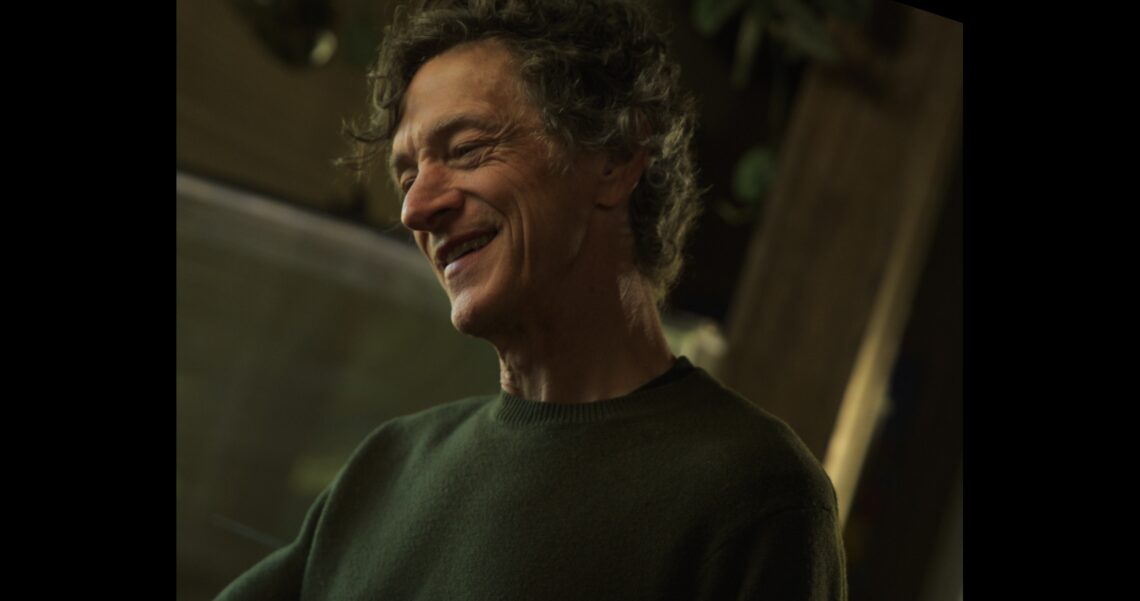

The first thing they teach you in film school is not to “cross the line”.
Typically, when you’re shooting coverage of two (or more) actors, you start by deciding where the 180 degree axis will land.
If you shoot over the right shoulder of actor A, then you need to shoot over the left shoulder of actor B. That way, their eye-lines will match and the viewer won’t be confused.
Most of the time, this is exactly what you want to do. Because if you just haphazardly shoot your coverage without any care for “the line”, it can become disorienting very quickly.
But what if the point is to disorient the viewer?
That’s when crossing the line can become a creative tool, rather than a technical faux pas.
On my upcoming short film Jack & Christine I intentionally jumped the line in a way I’ve never done before.
It was definitely a risk. Not only because I’d never quite attempted it in this way, but because this short film was one of my biggest to date.
Unlike many of my shorts that have been made with no crew and no budget, this one had a decent sized team and even an investor.
Not to mention, I would be working with three incredible actors, including an academy award nominee (John Hawkes).
The safe choice would have been to adhere to the 180 degree rule. But this project just called for something different.
The story is told from the highly subjective POV of an unreliable narrator. An unhinged husband who has delusions about his wife having an affair.
Most of the film takes place over a dinner party between the man, his wife, and a mutual friend that he suspects is in a secret relationship with her.
The blocking was such that the unhinged husband (Jack) sits on one side of the table, and his wife (Christine) and their friend (Darren) sit across from him on the opposite side of the table.
Emotionally, I wanted this scene to feel like we were trapped in the confusion of Jack’s psyche. He was supposed to see his wife on the same “team” as Darren, and himself totally disconnected from the two.
To accomplish this, I started by covering Chrstine and Darren (who were sitting beside each other). And I placed the camera exactly where Jack would have been sitting (across from them).
I asked the actors to look almost directly into the lens when they were talking to Jack, but also placed their eye-lines just barely left or right of where they should have been.
This meant that every time they would look at Jack, their eye-lines would technically be “off”, as it just barely crossed the line by an inch.
But when they would look at each other, their coverage would match perfectly – because they would be facing each other in profile.
When it came time for Jack’s coverage, I placed the camera directly in between Darren and Christine. This allowed Jack’s shot size and angle to match theirs (essentially being a straight on close up), while still technically placing him on the opposite side of the line.
If you look at the coverage closely – and with a trained eye – you can tell the line has been crossed.
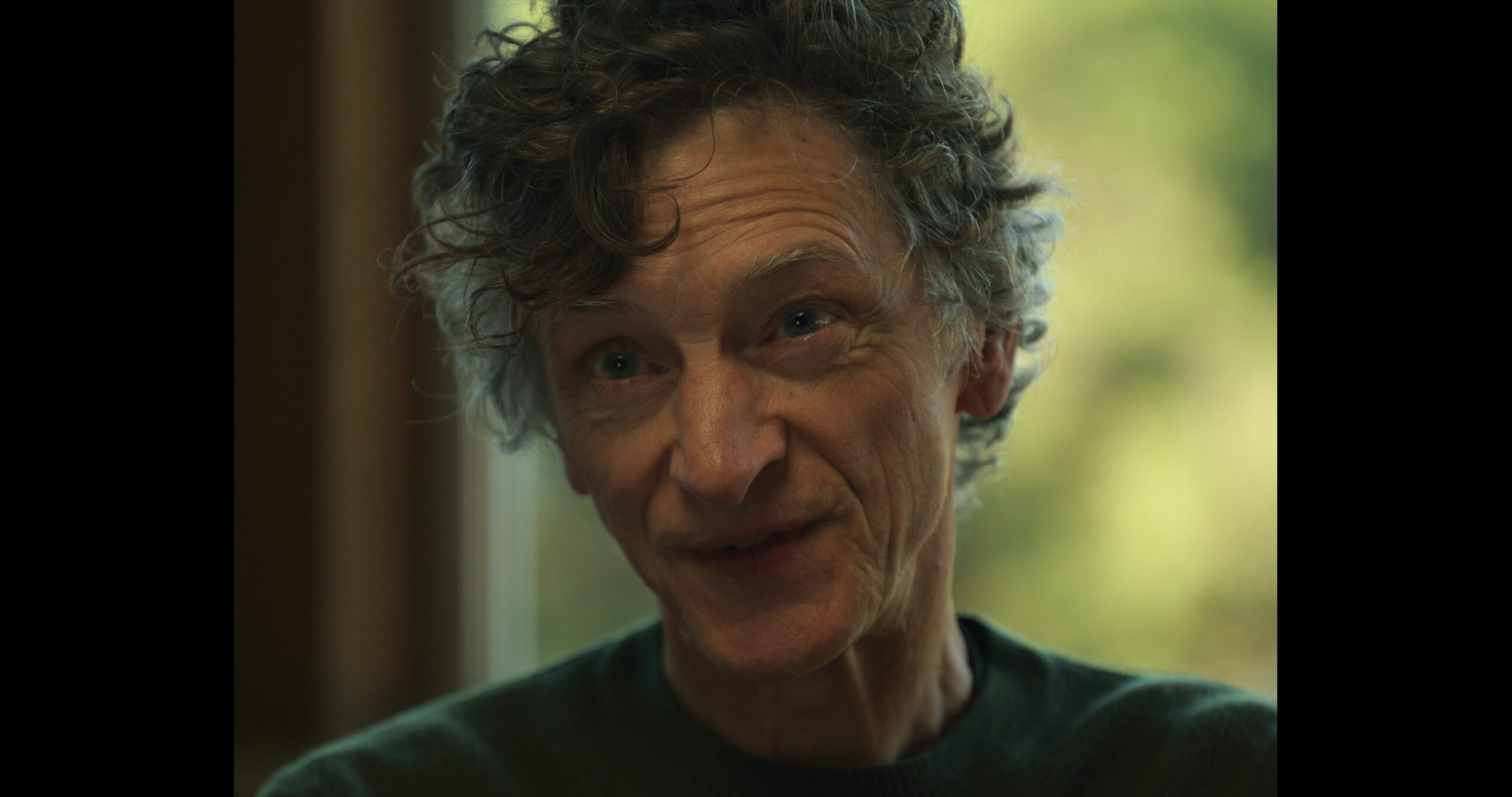
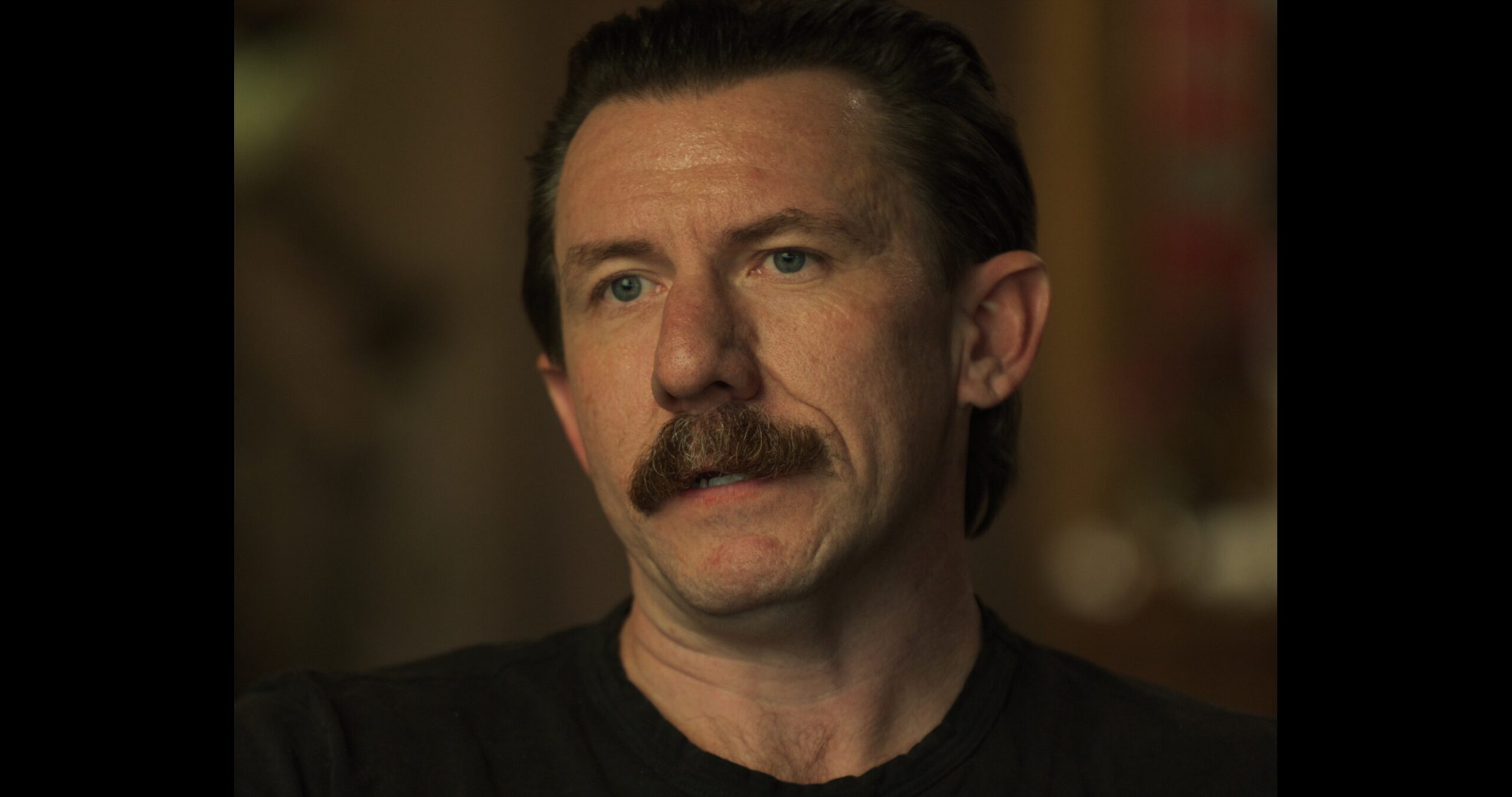

But having now shown it to a number of filmmaker friends as I near a picture lock – Not a single person noticed that I crossed the line.
Yet everyone felt as if they were pulled into Jack’s POV. They sensed reality slipping away from him without realizing why.
That was the goal, and thankfully it worked.
In retrospect though, it worked for 3 main reasons:
1. The characters never got up from the table.
When your actors are stationary, it’s a lot easier to cross the line. The viewer already understands they’re all sitting together at a dinner table. It’s not nearly as disorienting to cross the line in this setting as it would be if there was more movement and more complex blocking.
2. The closeups were framed extremely tight.
Most of the coverage in this scene is captured at a closeup or extreme closeup level. This makes it even easier to get away with breaking the 180 degree rule, because it takes away some of the spatial awareness of the environment that may otherwise confuse the viewer.
3. The coverage was shot straight on.
The camera was placed almost directly in front of the actor’s faces. So while I was technically crossing the line, I was only doing so by small margin. Had I shot on a more extreme 45 degree angle, the actors would have been more obviously positioned away from each other, and it may have become a bigger distraction.
Going into production, I knew I might take this approach, but I didn’t actually commit to it until I got to set and saw it on the monitor.
Even then, my AC questioned whether it might work in post, but I had to try as it just seemed like the right choice for the film.
In the end, I’m really glad that I took the more experimental route with this film. It’s one of those tiny details you feel more than you see, but it fully contributes to the emotional experience.
That said, if you are going to attempt to break the 180 degree rule yourself, proceed with caution. In some cases it can work beautifully, in other cases it can feel like a film school mistake.
And even in this case where it did work, I still had to finesse it in post to make it invisible. I would often cut when one actor was looking away, to make it less obvious that the eye-lines were not a perfect match.
The film is almost complete, so I look forward to sharing the results in full very soon. But for now, hopefully this is helpful for those of you looking to take a more experimental approach to your coverage.
For exclusive filmmaking articles every Sunday, sign up for my newsletter here!



2 Comments
byrd
atReally enjoyed this behind-the-scenes perspective! It’s fascinating to see how breaking the 180-degree rule can create a fresh visual style and change the way a scene feels. Great insights for anyone interested in filmmaking and creative storytelling. geometry vibes would be a fun change of pace after reading this! 🎬
Invosmith
atYour explanation that “Because if you just haphazardly shoot your coverage without any care for “the line”, it can become disorienting very quickly.” gives readers a concrete point to consider. What example or limitation would you add if you updated this today? Disclosure: I work on
Invosmith invoice generator , a separate invoicing tool.