
Filmmakers consistently underestimate the potential of their work to their own detriment.
Many of us have some kind of ideal goal for our careers. We want to raise X amount of money. We want to make an A24 movie. We want to premiere at Sundance.
Those are all great goals to have, and I truly believe anyone with enough talent and work ethic can get there.
But not if your approach is to treat every other project along the way like a stepping stone, even if that’s what it eventually becomes in hindsight.
Years ago I remember helping out on a student film set. The filmmakers had a ton of resources from their school: gear, crew, locations, insurance, everything you would need to make a great movie.
The only thing they didn’t have was an appreciation for the opportunity right in front of them.
To them, it felt like this was just some insignificant short film that no one would see. Sure, they were trying to make it look and sound good, but they clearly didn’t go the extra mile, because deep down they felt like it would never be the thing that helped them “break in.”
I’ve seen that pattern emerge over and over again. Not just on student films, but on well-funded shorts and micro-budget features too.
For some reason, when filmmakers initiate their own projects, they tend to give them less legitimacy than when someone else is commissioning or funding them.
That mentality can be incredibly detrimental.
The vast majority of filmmakers who have landed funding for a big feature cut their teeth on much smaller projects first. Ones with tiny budgets, skeleton crews, and no production company attached.
But the difference is, they treated those tiny projects with the same gravity and enthusiasm as their eventual feature films.
They didn’t see those projects as too small to matter. They didn’t phone it in or treat it like a box to check on their filmmaker resume.
Whether it was a 2-minute short or an 80-minute DIY feature, they gave it 110%. Even when the odds of anyone seeing their work, or caring at all, were next to zero.
If there’s one thing that separates filmmakers who cut through the noise, it’s that level of care for their work.
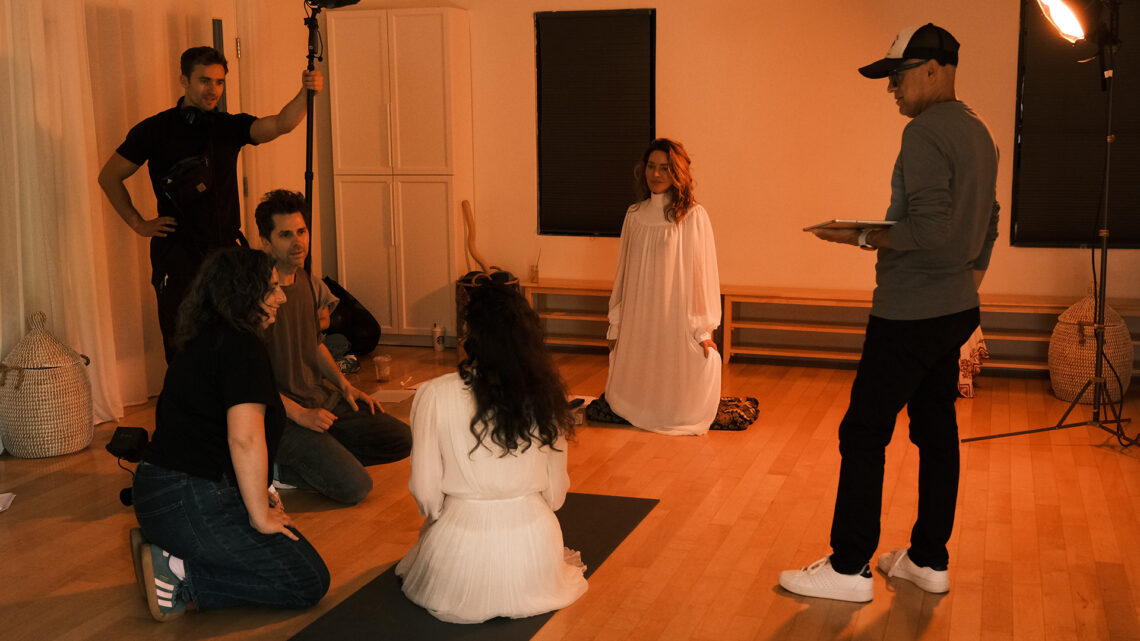
I’ve been thinking a lot about that this week. On Wednesday, I’m directing a short film I’m very excited about. It’s a genre film called Crow and it takes place in the world of hot yoga.
A decade ago, I might have thought about the project like a stepping stone. How can I make this into a feature? Who can I share this with when it’s done to turn it into something bigger?
But now, even after having made 4 features, I am not thinking about the “bigger picture.” I am thinking about this 6-minute short film and how to make it the absolute best it can possibly be.
I’ve rewritten the script from scratch multiple times and have done 7 drafts of the latest version. I am building props, testing gear, and going the extra mile with wardrobe and set design.
And I’m doing it because I know every project is what you make of it.
I could have convinced myself that the first draft was good enough. Or that I didn’t need to spend days testing lenses and gear to get the exact right look. And I may have still made a decent film.
But decent is simply not good enough.
For all of us, no matter what stage we’re at, we have to push ourselves to our creative limits. We can’t wait for someone else to tell us that our work is important.
I know filmmakers who have made studio-funded films that didn’t change their careers at all, and then (in some cases) went on to make shorts or micro-budget features that completely changed their lives.
You never know which project is going to hit. You can guess all you want, but you really never know.
That’s why you should treat every film like it’s your last.
Whether it’s your first or your 10th. Whether it’s a short or a feature. It doesn’t matter.
Any film, of any size and any length, has the potential to change everything.
But not if you treat it like a pit stop on the way to something better.
For exclusive filmmaking articles every Sunday, sign up for my newsletter here!



9 Comments
Zoey Lynch
atFor independent filmmakers especially, it seems easy to get caught up in budgets, trends, and what might sell rather than thinking about the kind of Meccha Chameleon story they actually want to tell. That mindset about making each project count is something I can see being useful even outside filmmaking.
Geometry Dash Lite
atI found the observation “Treat Every Film Like It’s Your Last Written by Noam Kroll 7 Filmmakers consistently underestimate the potential of their work to their own detriment.” especially useful. What usually causes this to work differently in practice? Disclosure: I work on
DashedUp , an independent Geometry Dash Lite site.
Sofia Johnstone
atThis is a fantastic point! It’s so easy to get caught up in the “next big thing” and undervalue the project right in front of us. Every film, no matter how small, is an opportunity to hone skills and build a portfolio. It reminds me a bit of how even simple games, like Snow Rider 3D, can unexpectedly offer valuable lessons in persistence and navigating obstacles. Every creative endeavor has its own unique worth.
Nancy
atAbsolutely loved your perspective on treating every film like it’s your last! It really emphasizes the importance of passion in filmmaking. What do you think about incorporating more interactive elements, like audience feedback, into this mindset? It could elevate storytelling even further! fnaf 3 game free
Felix Bayer
atThis is such a crucial point! Thinking of every project as just a stepping stone often means we miss the present opportunity to truly excel. Each film, no matter its scale, deserves our full dedication. It reminds me that sometimes the most unexpected detours can lead to the biggest breakthroughs, not unlike navigating a tricky Slope in a game, where careful attention to each turn is key: Slope. It’s all about making the most of where you are right now!
Soltamurad Aslakhanov
atThat’s such a fantastic mindset, seriously! It reminds me of how I approach certain games – every decision feels critical. Speaking of critical and intense, it’s exactly how I feel diving into a new session of FNAF. That game truly is an iconic horror game that delivers a truly tense and suspenseful experience, making you feel every second counts. You’re constantly on edge, and the scares are just perfectly timed. It makes you appreciate the craft behind it all. Do you find this “treat every moment like it’s your last” approach helps you get more immersed in films too?
Theresa Brown
atWow, what an inspiring read! I love the idea of treating every film like it’s your last—it’s such a powerful perspective. It reminds me of my own experience when I made a short film for fun and ended up pouring my soul into it! Also, diving into fnaf really shows how immersive storytelling can be; even in games, we need to give our all. Thank you for this motivation!
Antonio Gentry
atThe expansion of rhythm games is a result of both its gameplay and its innovation. Many games generate unique experiences by fusing music with puzzles, combat, obstacle courses, and adventure.
Bradley Meadows
atThank you for this insightful post, Noam. I appreciate your reminder to approach filmmaking with urgency and passion; it resonates deeply in a world filled with distractions. However, I wonder if sometimes embracing the process over the end product might yield unexpected creativity. It’s like exploring new realms, much like how games such as spider solitaire free encourage discovery. Keep inspiring us!