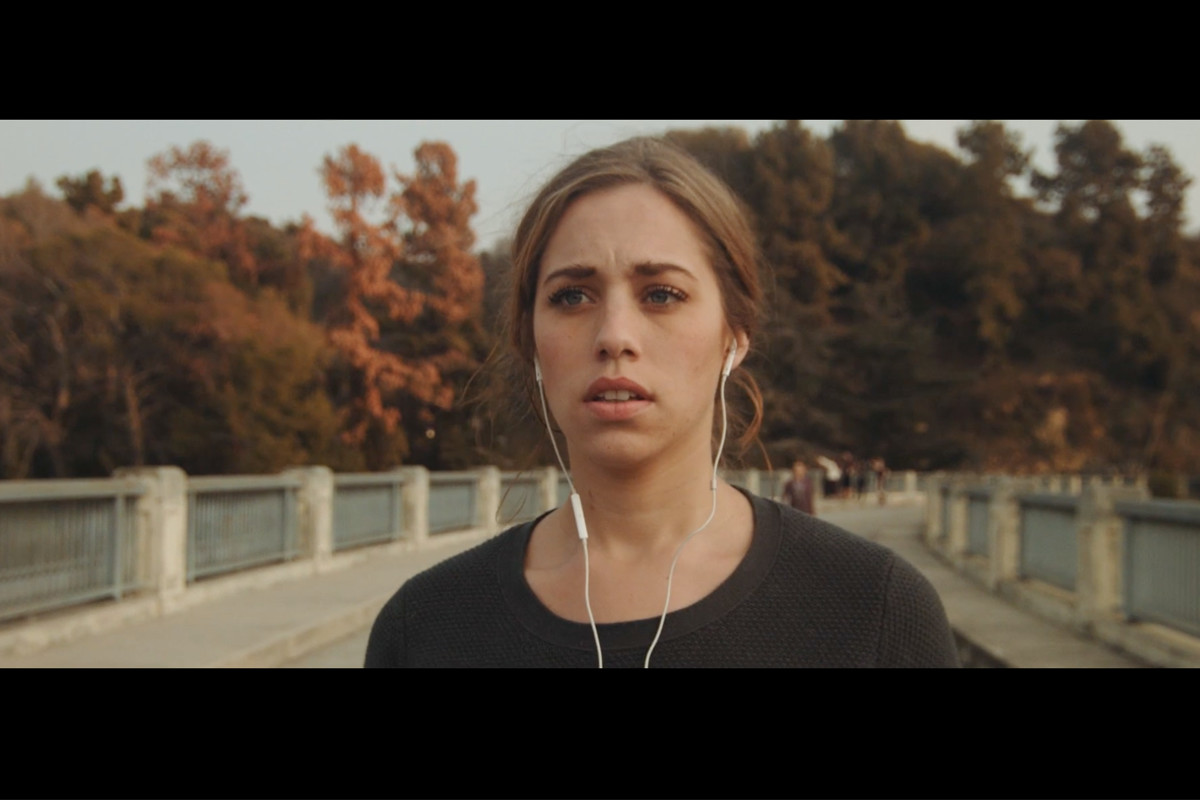

This week I revisited one of my earliest shorts – a 90 second film called MICRO with no dialogue, shot with no crew, and made up on the spot.
It was meant to be a throwaway camera test. Shot in four hours with no script, yet it has outperformed projects I’ve spent months on. And it even picked up another 100k views this week, ten years after the fact.
If you haven’t seen it yet, check it out below (worth watching before reading the rest as there are some spoilers).
Back in 2016, I was experimenting with Blackmagic’s Micro Cinema Camera, which I still have to this day.
But rather than just shoot some test footage, I thought I would get a couple friends together and shoot a little short film instead.
We met up one Saturday morning with no script and no plan. I came up with an idea, workshopped it with the actors, and four hours later we had finished shooting the whole thing.
If memory serves, it was edited that night, scored very quickly, and posted online without submitting to any film festivals.
Little did I know, it would become one of the most viral short films I would make.
To this date, it has been viewed hundreds of thousands of times without any real promotion.
Looking back on the film and the result, there are a few key takeaways I think are worth sharing:
1. Never put too much pressure on your work
This film succeeded because it was never intended to be anything special. It was just a fun experiment to test out a camera.
Had I taken it more seriously, the film may well have turned out worse. I might have questioned the simplicity of it, or convinced myself it had to be longer.
I might have decided the idea needed more time or that I would raise some money to “do it right.” But then, I may have never made it at all.
Not caring so much about the result is what ultimately made it real.
2. There is no such thing as “too short”
A lot of filmmakers would scoff at the idea of making a 90 second short film. There is this false idea that the longer your film is the more it legitimizes you as a filmmaker.
I bought into that idea for a long time, but projects like MICROcompletely changed my thought process. Seeing a tiny project that I made on a whim in an afternoon reach more people than projects I had spent months on was an eye opener.
And ultimately, brevity can be one of the highest forms of creative expression. A film of any length can leave a lasting impression. It’s possible to move people more in 2 minutes than you could in 2 hours.
3. You don’t always need dialogue to make something great
This short film had zero dialogue, and no sound design either. It’s essentially just a handful of shots set against a score.
It goes without saying that most films need dialogue – at least in small amounts. But knowing how much you can achieve without any dialogue at all is liberating.
If you’re making something that is extremely DIY (like this project), removing the need for dialogue will make it 100x easier to pull off.
You don’t need a sound recordist on set, you don’t have to worry about doing a dozen takes because the actor forgot their lines, and you can edit the material 10x faster.
And in terms of audience reach – films with no dialogue tend to travel more easily online. There is no language barrier, so they can be viewed and understood globally by anyone who wants to watch.
4. Be ambiguous on screen, but crystal clear in your mind
MICRO is an ambiguous film by design. It follows a woman who finds a micro SD card dropped by a shady looking character. And later discovers the SD card contains footage of herself at home alone.
Despite the simplicity, I still had my own internal logic and a more complex backstory solidified in my mind before we started shooting. I knew none of it would make it onto the screen – but that wasn’t the point.
Ambiguous films only work when there is an internal logic to them. That logic doesn’t have to be 100% clear to the viewer, but it does have to be clear to the filmmaker. Because without it, creative choices have no anchor, and the end result comes across as random.
I’ve taken this lesson into the feature film I am writing now, which leans heavily into ambiguity. But it still works on the page because every decision has a logical underpinning that I’ve genuinely thought through.
5. Answer one question, raise two more
My favorite endings to films answer a central question, but at the same time open up a whole new set of unknowns. That’s what lets the audience feel satisfied, but also eager to discuss what they just saw.
On MICRO, the central question is – who is the man that dropped the SD card and ran away? It’s answered when she puts the SD card in her computer and realizes he was her stalker.
But in that moment, it also naturally raises other questions – Why was he stalking her? What will he do now that she knows?
It leaves you feeling satisfied that the story concluded, but also wanting to know what comes next. If you can achieve that type of emotional response, it often leads to the best audience experience.
For exclusive filmmaking articles every Sunday, sign up for my newsletter here!



4 Comments
Bennie Sloan
atSlope 1 turns a simple rolling ball into a serious reflex challenge. Endless tracks, sudden turns, and increasing speed keep the gameplay intense as players try to beat their previous score.
Ramona
atThe big takeaway here is the power of constraints. By stripping away unnecessary complexity, focusing on a single high-concept idea, and keeping the setup lean, you can channel all your energy into raw storytelling, sharp performances, and tight pacing. It’s a great reminder that strong creative execution and emotional resonance will beat shiny, bloated production value every single time.
Deconstructing lean creative workflows and production hacks can definitely spark a ton of ideas! Once you finish soaking in those filmmaking tips and mapping out your next project, taking a quick mental break with a fun round of meccha chameleonis a fantastic way to recharge your creative energy!
skilletachieve
atOne of the biggest traps in phrazle is assuming that familiar words automatically mean an easy solution. That’s what makes today’s puzzle so much fun.
Virgie Abraham
atI essentially make about 6,000-8,000 every month on the web. It’s sufficient to serenely supplant my old employments pay, particularly considering I just work around 10-13 hours every week from home. I was stunned how simple it was after I attempted it duplicate underneath web….… https://tinyurl.com/pmvvzsea