
This month I’ve found myself in discussions for two of the biggest film projects I’ve ever been considered to direct.
In both cases, it was my micro-budget projects that got me in the room. The very films that many traditionally minded filmmakers had advised me not to do, as they were seen as “too small” and insignificant.
But without them, I would have no body of work. I would have no experience. And no network of collaborators. Each of which has played a pivotal role in helping me reach this next phase.
While I have had many moments of doubt over the years, I always believed in the micro-budget path. It was the only thing that made sense to me.
I wanted to get in my 10,000 hours, and I saw no other way to get there. No one was going to hand me millions of dollars to make a film, nor did I care to make a movie for a huge budget.
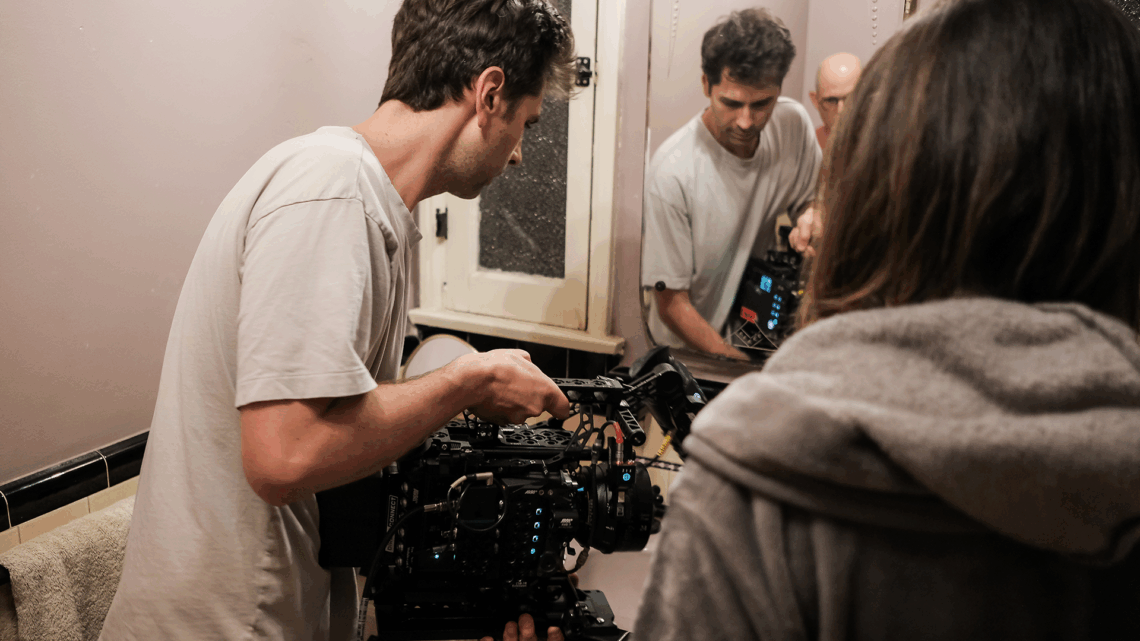
My North Star was always the work itself. Writing, directing, editing. Being on set and working with actors. Learning the craft and finding my voice as an artist.
There were never any guarantees of success, and there certainly still are not. But creating art was always the only option. I had seen too many filmmakers remain stagnant for years, waiting for the perfect moment, only to look back 10 – 15 years later and wish they had just started.
Even still, I had completely overlooked perhaps the greatest benefit to making these micro-budget films.
I always assumed the main purpose of DIY filmmaking was to build a body of work. To prove that I could see projects through, and make something out of nothing.
But what I never realized was the greater gift these films provided was an ability to speak to the process from real world experience.
In multiple conversations this month (for totally different projects), it was my on set experience that drove the discussions. Talking about working with different types of actors, putting out fires on set, solving specific issues in production & post, and a million other things.
Had I never made a film before, I would have nothing to offer in these conversations. There would be no way to give others confidence in my own abilities without being able to speak from experience.
It all played a giant part in both getting me into the room, but more importantly giving me something to say once I was inside.
On one recent lunch meeting, without even realizing it, I had referenced anecdotes from every single film I had ever made. Including the smallest projects I made with no money and no crew – which often made for the best topics of discussion.
And for the first time, my micro-budget journey clicked in a new way. I saw the importance of each one of my very humble productions through a new lens.
Suddenly, projects I made 10 years ago for no money were relevant again. And they mattered as much (or more) than projects I had made more recently with slightly better means.
I share this to remind filmmakers of the importance of creating your art.
There are so many people out there who will try to stop you. Often, with very convincing arguments.
But what most people don’t get is that the intangible benefits of filmmaking are the most valuable. Just because you can’t quantify them, doesn’t make them any less real.
A “failed film” that you make today, will still put you 10x further ahead than the perfect film that only exists in your mind. It not only makes you a better artist, but it allows you to speak from experience. And that experience is exactly what is needed to give other people confidence in working with you on a higher level.
Personally speaking, I can now draw a direct line between the smallest most “insignificant” projects I’ve ever made, and the biggest opportunities that have ever come my way. And I am no anomoly – this is true of countless filmmakers.
So if nothing else, try to remind yourself of this when looking back on your body of work, or considering whether it’s worth making something small.
Every project is worth it. No matter the immediate outcome, they will all serve you long term in ways you can’t yet imagine.
For exclusive filmmaking articles every Sunday, sign up for my newsletter here!


25 Comments
Morgan Lee
atThanks for the detail. The 122-asset library is at TikTok Banner
Morgan Lee
atSolid write-up. The scored version is at South Park Test
Alex Chen
atEnlightening. The primary-source links are at Pneumonic Plague News
Morgan Lee
atEnjoyed this. I had a go at the valley in Threshing Day Game
Sam Rivera
atNice article! Learned something new today. Lagos Life Guide
krillion tiers
atThis piece really resonated with me, especially your point that the greatest gift of micro-budget filmmaking was learning to speak to the process from real world experience. I’ve seen so many filmmakers stagnate waiting for the perfect moment, just as you describe, and it’s inspiring to hear how your on-set hours actually got you into rooms for those two big projects. It reminds me that the work itself, not the budget, is what builds a voice and a career. I also appreciated your honesty about moments of doubt; it makes the micro-budget path feel achievable rather than romanticized. Understanding your own scoring system can work the same way: Krillion rarity tiers. Thanks for sharing this, Noam—it’s a needed reminder to just start.
Concrete Cost Calculator
atGreat perspective! I completely agree that your micro-budget work provides the essential ‘real-world’ experience. Just like when you calculate project costs accurately for a set build, you need that foundational knowledge to handle any production challenge. Experience is the currency that ultimately earns you a seat at the table.
Reveedo AI Tools
atWhat stands out is how the smaller films function as proof of work, since the bigger opportunities only came because there was something concrete to point to rather than just a pitch. Use Reveedo AI Tools
Reveedo AI Image Generator
atWhat stands out here is how the small films became the actual calling card rather than a stepping stone to be endured, since nobody hands out real budgets without proof you can finish something. Use Reveedo AI Image Generator
Reveedo Image to Image
atThe point about filmmakers staying stagnant while waiting for the perfect moment hits close to home, because the work itself has always been what taught me the most, not the promise of a bigger budget later. Use Reveedo Image to Image
Reveedo Image to Image
atThe point about filmmakers staying stagnant while waiting for the perfect moment hits close to home, because the work itself has always been what taught me the most, not the promise of a bigger budget later. Use Reveedo Image to Image
Reveedo AI Video
atThe idea that no-budget work builds your network over time resonates, since collaborators you meet on tiny sets often become the ones who bring you onto larger projects years later. Use Reveedo AI Video
Reveedo AI Effects
atThe point about filmmakers staying stagnant while waiting for the perfect moment hits hard, because the work itself is what forces you to grow in ways a bigger budget never could. Use Reveedo AI Effects
Reveedo Text to Video
atWhat resonated with me is how the small films build a network of collaborators you can call on later, which matters more than any single project’s commercial result. Use Reveedo Txet to Video
Reveedo
atThe part about waiting for the perfect moment really stuck with me, because it’s easy to spend years convincing yourself you’re not ready when the only thing that would actually move you forward is shooting something small. Use Reveedo Generate images and videos
Reveedo
atThe part about waiting for the perfect moment really stuck with me, because it’s easy to spend years convincing yourself you’re not ready when the only thing that would actually move you forward is shooting something small. Use Reveedo Generate images and videos
Reveedo Blog
atThe idea that a tiny film can be the thing that opens the door to bigger rooms is easy to dismiss until you notice how many directors got their first real attention from something they shot for almost nothing. Reveedo Blog
Narinig Mo Ba
atThe point about getting in your 10,000 hours through small projects resonates, since waiting for perfect conditions usually just means watching years pass without any work to show for it. Play Narinig Mo Ba
Poople Unlimited
atThis piece resonates deeply with me. The idea that micro-budget projects serve as the foundation for future opportunities is spot on. Much like honing your linguistic strategy to master the perfect word sequence, filmmaking requires constant, low-stakes practice to build genuine expertise. It’s the practical experience from those ‘small’ projects that truly builds the confidence needed to handle the bigger challenges in your career.
RandomPokemon
atYour point that micro‑budget films “give you something to say once you’re inside” really resonates—having actually solved on‑set problems makes your advice far more credible than theory alone. It’s striking how those early projects, dismissed as “too small,” became the very credentials that opened doors to larger opportunities.
For a nuzlocke run I just use a random Pokemon picker instead of rolling dice.
jerry
atYour point about micro‑budget films opening doors is spot‑on—when you mentioned that your “on‑set experience” and anecdotes from every project convinced collaborators, it highlighted how practical knowledge can outweigh a big budget. It’s a compelling reminder that the craft itself, not the money, is what builds credibility.
Lucas Dubois
atThis really hit home. I spent years waiting for the “right” budget before making anything, and the moment I just shot something small with friends, everything changed — collaborators, confidence, the actual craft. Every filmmaker I know who’s still at it took that same no-budget path, and honestly, narinig mo ba that advice about needing money first is the biggest trap out there. Your 10,000 hours point is exactly right.
Krillion
atThere’s a funny symmetry between betting on obscure trivia and betting on a no-budget film: both feel like a waste of time until they aren’t. The constraint forces sharper instincts. A 15-second clock and a seven-prompt daily cap might teach you more about your own blind spots than a hundred standard quizzes ever could. Krillion | Daily Trivia Game Where Rare Answers Win
Anna Dubois
atThis really resonates — my own no-budget shorts opened way more doors than I ever expected, and I found a tool at choicervoicer.app helpful for keeping writing momentum going between projects. The key really is just starting, as you say.
Ricky Blackwell
atspeedstars is characterized by a basic and clean graphic design, which makes players concentrate on the excitement of competition rather than distracted by excess and needless aspects.