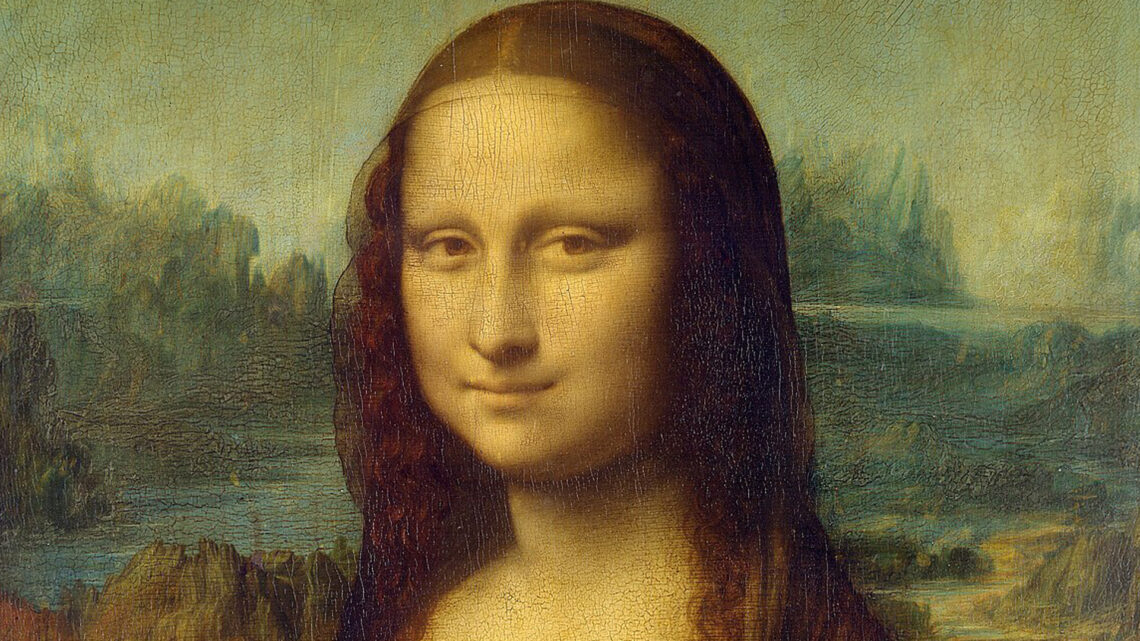

500+ years ago, Leonardo DaVinci pioneered the Sfumato technique, which changed the art world forever.
In Italian, Sfumato means “to evaporate like smoke.” And that was the effect DaVinci was going for on the canvas.
He used innovative methods to soften outlines, blur edges, and create a hazy effect on the boundaries of subjects.
While other artists were still painting with hard lines, DaVinci knew the key to great (and more naturalistic) art was to ensure there were no visible edge lines.
The most obvious and widely known application of the Sfumato technique can be found on DaVinci’s Mona Lisa – known for her captivating smile that feels incredibly lifelike, as if in motion.
This is a direct result of blurry, obscured edges and a lack of harsh lines.
When you look at the painting, your brain has to fill in the gaps. And depending on where you’re looking, the lighting, and the distance to the painting, it will appear slightly different every time.
The best art leaves room for the viewer to become a participant in the experience. And in effect, to complete the piece of art themselves.
So how exactly does this apply to filmmaking?
For one, most cinematographers are already applying their own version of Sfumato techniques. Without ever consciously realizing it.
Soft lighting, hazers, pro mist filters, vintage lenses, and countless other tools are used to soften and blur images. These tactics have become increasingly popular in the era of extremely high resolution video.
And after so much experimentation, filmmakers still prefer to shoot at 24 frames per second. Even though higher frame rates are now easily shootable and supposedly deliver a more “realistic” look.
It’s not about technical realism though, it’s about the effect on the viewer. And at 24 frames per second, there is much more motion blur and softness in the shots, which adds a level of Sfumato.
Less obviously, but perhaps more importantly, Sfumato principles should be thought of in the context of story and writing.
The best screenplays leave room for the audience to play a part in the narrative. Whether by leaving gaps in the plot that the viewer must fill in, embracing more ambiguous characters, or using subtextual dialogue that allows the audience to make their own interpretations.
No great screenplay has ever been written that does not leave something to the imagination. They all give the viewer the ability to interpret themes, narrative, and characters on their own terms.
The key to Sfumato however (both in fine art and cinema) is to balance it with clarity to avoid confusing or obscuring the message.
The Mona Lisa still looks like a realistic portrait. It is not abstract. Yet the subtle details that are left to the imagination are what elevate it to the timeless masterpiece that it is.
In filmmaking, this balance is achieved by embracing a focused narrative with clear themes and coherent story elements. But within those boundaries, looking for opportunities to incorporate ambiguity so that the audience becomes actively engaged.
So as you embark on your next project, remember: It’s often what you don’t show that makes the biggest impact.
For exclusive filmmaking articles every Sunday, sign up for my newsletter here!



62 Comments
Sax Start
atI got a few useful ideas from Applying Leondardo DaVinci’s. 500+ years ago, Leonardo DaVinci pioneered. If you are exploring the same topic, https://saxstart.com is worth a look as a complementary resource.
LagosLifeGuide
atI got a few useful ideas from Applying Leondardo DaVinci’s. 500+ years ago, Leonardo DaVinci pioneered. If you are exploring the same topic, https://lagoslifeguide.app is worth a look as a complementary resource.
Dm Win app guide for new users
atA good introduction should answer the small questions that usually come up when somebody opens an unfamiliar app for the first time. The Dm Win app guide for new users approach is useful because it can cover the basic navigation without making the process feel overwhelming. I would rather understand the account section, available options, and general usage first and then explore further. Rahul takes the same approach with new apps, as knowing the basic layout beforehand makes mobile browsing feel more organized and avoids unnecessary trial and error.
ok win login
atRemembering login details is one thing, but finding the correct account page without confusion is another. The information about ok win login gave me a chance to look at that part of the platform more closely. Ayesha usually checks the sign-in requirements first and keeps her account information private when using shared devices. Clear login instructions can make a noticeable difference, particularly for someone accessing a platform from a phone. When the steps are presented in a sensible order, there is less chance of making simple mistakes during account access.
Alice
atI found the discussion on Leonardo Da Vinci’s Sfumato technique fascinating. It’s intriguing how he softened outlines to create a hazy effect centuries before modern filmmaking. I’m curious if these methods have influenced contemporary visual storytelling beyond classic cinema. Also, while researching creative techniques, I’ve come across dress up games that use similar blending styles in character design, though those are more casual experiences.
Resident Evil Requiem Survival Guide
atI got a few useful ideas from Applying Leondardo DaVinci’s. 500+ years ago, Leonardo DaVinci pioneered. If you are exploring the same topic, https://requiemguide.com is worth a look as a complementary resource.
Jai Club Login
atThe login section is one of those things that can either make a platform feel simple or unnecessarily difficult. During my recent check of Jai Club Login, I focused on how the account-access area was arranged and whether the basic steps were easy to understand. The navigation seemed reasonably direct from my phone. Harish usually avoids entering credentials until he has confirmed the correct website address, and I followed the same habit while looking through the login section.
Jamie Parker
atI noticed the post focuses on how softening edges and letting viewers fill in gaps makes art feel more alive, and that idea seems to apply when you quietly observe birds too. With Birdly Yard you can explore local species by state and season, which might help you notice the subtle, hazy moments in your own backyard Birdly Yard field guides by state and season.
Hooper Vault
atI got a few useful ideas from Applying Leondardo DaVinci’s. 500+ years ago, Leonardo DaVinci pioneered. If you are exploring the same topic, https://hoopervault.com is worth a look as a complementary resource.
Pictnova
atThis was such a fascinating read! The connection between DaVinci’s Sfumato and modern cinematography really resonated with me. It’s true that the magic isn’t in crisp details but in the spaces we leave for the viewer’s imagination. The way soft focus and motion blur invite the audience to “complete” the image feels like a secret language between filmmaker and viewer. I also loved the reminder that technical realism isn’t the same as emotional truth—sometimes a little haze makes a story feel more alive. For anyone exploring visual storytelling, it’s worth experimenting with these soft, painterly textures. And if you’re ever looking for fresh imagery to play with in your own projects, I’ve found some lovely free options at ia imagenes gratis. Thanks for shedding light on this timeless technique—it’s inspired me to look at my own shots differently!
Raxi Win Game
atGame-related content is easier to explore when users can understand the page without constantly going back to the main menu. Raxi Win Game can be considered from this usability angle, including the way different options are displayed on mobile devices. Sneha prefers checking the basic rules and available information before trying anything. That habit keeps the focus on understanding the platform first, while features such as readable menus and straightforward navigation make the overall browsing process easier to follow.
Lorex Camera Black Screen
atTroubleshooting a Lorex Camera Black Screen? Learn the common causes and easy fixes, including power, connection, display, and camera settings checks to restore your video feed.
SeeAI
atAfter reading “Applying Leondardo DaVinci’s”, I liked how practical the whole piece feels. 500+ years ago, Leonardo DaVinci pioneered. One related page I keep coming back to is https://seeai.site; it adds another useful angle.
Raja games
atThere are plenty of gaming websites available online, but their usability can vary quite a bit. I spent some time looking through the Raja games section to understand how the platform presents its different options. The information was arranged in a way that did not require constant scrolling through unrelated sections. Anjali usually checks whether the basic details are easy to locate before exploring further, and that approach makes sense to me. A website becomes much easier to use when visitors can quickly understand where each important section is placed.
Ryan
atInteressant at se hvordan sfumato-effekten, der blødgør kanter og skaber dybde, også kan findes i moderne musikalske fortolkninger af nyheder, hvor det vague og多层 kan gøre opsummeringer mere engaging. Hos ScoopRYM omsættes komplekse og kaotiske historier til korte sange, hvor afstanden til kilden og den lidt uskarpe fortælling giver modtageren plads til at opleve nyheden selv.
Sax Start
atUseful breakdown of Applying Leondardo DaVinci’s. 500+ years ago, Leonardo DaVinci pioneered. The advice is easy to apply, and a related resource like https://saxstart.com fits the same topic well.
Lily
atThe connection between Sfumato’s softened edges and filmmaking’s subtle transitions is fascinating. Removing hard boundaries does make scenes feel more natural, which aligns well with DaVinci’s original intent of creating a hazy effect. For those exploring visual storytelling tools without complex setups, Topview AI Video Agent Explained seems relevant. I also enjoy finding a casual arrow game to relax while reviewing creative concepts like these.
topviewai
atThe connection between Sfumato’s softened edges and filmmaking’s use of subtle transitions is especially interesting—removing hard boundaries can make a scene feel much more natural. For creators exploring AI-assisted visual storytelling, Topview AI Video Agent Explained – Free Agent-Style Generato seems like a relevant resource for experimenting with cinematic ideas without a complicated setup.
highvalyriantranslator
atThe idea that Sfumato means “to evaporate like smoke” makes the technique especially vivid, especially alongside the emphasis on softening outlines rather than hiding detail. That same curiosity about language and origins led me to Where Every Word Comes From, a useful page for tracing where words come from.
bigjpgai
atThe idea of softening outlines instead of relying on hard edge lines is especially useful for creating more natural-looking shots. When working with older or low-resolution footage, I’ve found Free Photo Upscaler Online – Enlarge a Photo and Keep the De helpful for enlarging reference images while preserving enough detail to study those subtle transitions.
The Freak Circus Hub
atThe point that “the best art leaves room for the viewer to become a participant” really lands for me, especially the connection between DaVinci’s smoky edges and modern cinematography. I had never thought of 24fps as a Sfumato choice, but it makes sense: the motion blur and softness aren’t “less real,” they’re an invitation for the audience to lean in and complete the image emotionally. The same applies to your writing section—subtextual dialogue and ambiguous characters often stick with me longer than neat explanations, because my brain keeps working after the credits roll.
I also appreciate the warning that Sfumato needs clarity underneath. The Mona Lisa works because we still recognize a portrait; confusion isn’t mystery. That balance is exactly where horror games can excel. In a good visual novel, for example, blurred edges can be literal—foggy backgrounds, distorted mirrors, off-kilter sound design—but also structural: unexplained routes, unreliable characters, endings that only make sense after the player compares them. If you like digging into how ambiguity is built in interactive horror, I’ve found https://freak-circus.com useful for mapping Freak Circus routes, endings, lore, and hidden secrets without flattening the mystery too much.
Do you think audiences today are more patient with ambiguity because streaming lets them pause, rewatch, and theorize—or less patient because we expect everything to be explained in a finale or wiki? I’d argue Sfumato is even more powerful now: a slightly obscured smile can become a week of conversation. The trick is knowing what to keep soft and what must stay sharp.
BlessingTree
atThis is a beautiful breakdown of how ambiguity and restraint can create deeper engagement—a principle that applies just as much to visual storytelling as it does to craftsmanship. In both art and faith, it’s often the subtle details, the spaces left for personal reflection, that carry the most meaning.
Your point about balancing clarity with mystery resonates strongly with what we do at our shop. We handcraft cross and crucifix necklaces in stainless steel, olive wood, and 18K gold—pieces designed to be simple yet profound, leaving room for the wearer’s own interpretation and connection. Just as Sfumato invites the viewer to complete the painting, we believe faith jewelry should invite the wearer to complete their own story.
If you’re ever looking for a tangible symbol of that balance between clarity and depth, we’d love for you to browse our collection. Free shipping on 2+ items.
Explore our handcrafted faith jewelry here.
NBA 2K BUIILD SCOUT
atThis is a fascinating read, and I love how you’ve drawn the line from DaVinci all the way to modern cinematography — the point about 24fps being a deliberate choice over “more realistic” higher frame rates really landed for me. It’s a great reminder that technical perfection and emotional impact are two very different things, and audiences often respond more to the latter. The pro mist filters and vintage lenses point hit home too — it seems like every time resolution increases, filmmakers reach for more tools to soften it back down. There’s something deeply human about preferring a bit of haze.
The screenwriting section is where this really clicked for me. “No great screenplay has ever been written that does not leave something to the imagination” — that’s a quote worth pinning above the desk. The balance you describe, between ambiguity and clarity, applies to so many creative fields. In game design, especially in build systems like NBA 2K27, there’s a surprisingly similar principle at play. The best builds aren’t about maxing everything out — they’re about understanding trade-offs and making deliberate choices, knowing exactly what you’re giving up to gain something else. Lately I’ve been using https://2kbuildscout.com before committing my VC, since it lays out the strengths and honest trade-offs of a build direction before I sink hours into it — basically the “focused narrative with clear themes” equivalent, so I’m not guessing and hoping for the best.
One question I’d love to hear your thoughts on: with AI-based tools increasingly able to remove grain, sharpen footage, and “clean up” images automatically, do you worry that a generation of filmmakers raised on auto-enhanced footage might lose the instinct for when softness is the right artistic call? DaVinci had to fight for his haziness — will the next wave of artists even know what they’re losing?
Great piece. I’ll never look at the Mona Lisa’s smile the same way again.
Shafiq Khan
atI really enjoyed the connection between Da Vinci’s Sfumato technique and modern filmmaking. The idea that soft edges, ambiguity, and subtle details can encourage the audience to participate in the story is fascinating. I especially liked the point about balancing ambiguity with clarity—leaving something to the imagination without making the narrative confusing. It’s a great perspective on how visual art principles can influence storytelling. For readers who enjoy exploring science and educational topics, there are also some interesting resources available at PhyFundamentals.org.
It Reaches Guide
atThis is a brilliant framing, Noam. The line that really stuck with me was “the best art leaves room for the viewer to become a participant in the experience.” I’ve been shooting digital for years and always wondered why, despite endless debates about resolution and sharpness, I keep reaching for pro mist filters and vintage glass — you just articulated why. We’re instinctively fighting that clinical, over-defined look because it removes the space where the audience does the interpretive work.
Your point about 24fps being a subconscious Sfumato choice is especially sharp (pun intended). Higher frame rates deliver more “realism,” yet audiences find them alienating precisely because motion becomes hyper-defined — there’s no haze, no blur, nothing left for the eye to fill in. The brain doesn’t get to complete anything, so it disengages instead.
What really resonated though is your pivot to screenwriting: “No great screenplay has ever been written that does not leave something to the imagination.” This is where so many scripts fail — they over-explain motives through dialogue instead of trusting subtext. David Mamet’s rule of cutting all lines starting with “I want” comes to mind as the screenwriting equivalent of DaVinci refusing hard outlines.
Interestingly, I’ve noticed this exact principle at play in narrative games, where ambiguity is arguably even more powerful because players literally inhabit the experience rather than just watching it. Games that let players piece together fragmented story details — filling gaps themselves the way we do with Mona Lisa’s smile — tend to be the ones people can’t stop discussing years later. I’ve been digging into this with interactive narratives recently, and a resource like https://itreachesguide.com has been helpful for comparing how different endings and story interpretations function across choice-driven games — it’s fascinating to see which titles trust their audience with Sfumato-style ambiguity versus which ones over-explain everything.
Your closing warning about balancing softness with clarity is essential. Ambiguity without a clear thematic spine is just vagueness. What’s your take on filmmakers who lean too hard into obscurity — is there a line, or is it purely subjective?
narinig mo ba
atI like the idea of using sfumato in filmmaking — it feels like a reminder that not everything on screen needs hard edges or loud contrast to hit hard. It even makes me think of **narinig mo ba**, where the atmosphere and what’s left half-hidden matter way more than spelling everything out.
bigjpgai
atI like the connection between DaVinci softening hard outlines and how filmmakers can use haze, diffusion, and subtle contrast to guide the eye without making edges feel artificial. For anyone testing still frames or enlarging reference images while preserving detail, Bigjpg AI’s photo upscaler Free Photo Upscaler Online – Enlarge a Photo and Keep the De could be a useful companion.
Hematiteforce
atThis is a thoughtful breakdown of Sfumato—not just as a visual trick, but as a philosophy of leaving room for the viewer to co-create meaning. I love the parallel you draw between DaVinci’s soft edges and the way great screenplays trust the audience to fill in the gaps. It’s a reminder that in storytelling, subtraction often adds more than addition.
For anyone who values that same principle of understated, lasting craftsmanship, I run a small shop offering genuine hematite bracelets — real iron ore, hand-braided, with an adjustable sliding knot. No fillers, no gimmicks. Just a clean, honest piece that gets better with wear, much like a well-told story. If you’re looking for something simple and durable that speaks for itself, you can see the collection here: https://hematiteforce.com/
relationship astrology
atGreat read, will apply this thinking to my own work.
personality quiz
atExcellent, the participatory art idea is compelling.
stl viewer
atVery well written, the smoke-like effect is a beautiful metaphor.
webp tool
atWonderful connection between painting and cinematography.
smash or pass
atGreat perspective on hazers and pro mist filters.
crop video
atLoved the Mona Lisa example, really clarifies the technique.
social mockup
atVery insightful, soft lighting as Sfumato makes perfect sense.
compare json
atExcellent write-up, DaVinci’s influence still resonates.
trim gif
atGreat article, the idea of leaving room for the viewer is powerful.
invisible character
atSuch a poetic way to approach lighting and haze.
spreadsheet converter
atBrilliant comparison, will think about this on my next shoot.
heic to png
atReally enjoyed the historical context and practical application.
convert avif
atWonderful piece, Sfumato in film is such a thoughtful concept.
test mouse
atGreat explanation of how blur can enhance storytelling.
comfort verses
atVery inspiring, the Mona Lisa analogy is spot on.
ao3 quiz
atExcellent insight on soft edges and viewer participation.
days calculator
atLove how you link classic art techniques to modern cinematography.
tuimiz
atFascinating connection between DaVinci’s Sfumato and filmmaking, great article.
MinecraftRecipe
atI like the idea of using Sfumato in filmmaking to soften the edges of a scene instead of making everything feel too crisp and obvious. It actually reminds me of how a good Minecraft Recipe search tool helps you see the bigger crafting flow, not just one hard step at a time.
MagnetPure
atThis article brilliantly reframes Sfumato as both a visual and narrative tool—reminding us that what filmmakers leave out often matters as much as what they show. For anyone who loves the idea of combining timeless craft with functional design, the same principle of subtle, natural support applies to everyday wellness. At MagnetPure, we offer solid copper bracelets with neodymium magnets, designed for adults seeking gentle joint comfort and circulation support during long shoots, editing sessions, or daily wear. Just as DaVinci balanced clarity with ambiguity, our pieces balance classic aesthetics with practical, unobtrusive benefits—no gimmicks, just honest materials. If you’re exploring how small, thoughtful details can enhance your craft and comfort, check out our collection here: MagnetPure. A subtle addition to your routine might make a bigger difference than you expect.
image text editor
atI really like the way you connect Sfumato to both the image and the screenplay, especially the point about leaving room for the viewer to complete the experience. It’s a useful reminder that softness and ambiguity can be creative choices, not just technical artifacts. Even simple tools like an Image Text Editor can reinforce that idea when experimenting with how text, edges, and visual clarity affect perception.
Aman Rajput
atI always appreciate articles that explain topics in a practical and easy-to-understand way, and this guide certainly achieved that goal. The writer maintained a smooth flow from the introduction to the conclusion, making every section simple to understand for readers. Around the middle of the article, tiranga game app appeared naturally while explaining one of the important aspects of the topic, blending perfectly into the surrounding discussion.
Librarian Game
atInteresting read! I never thought about how the blurry edges in the Mona Lisa actually make her smile seem more alive. It makes sense that applying that same idea to film could create a more natural, immersive look. I also found Librarian Game useful when checking related examples.
7a0
atThinking about DaVinci blurring edges in the Mona Lisa makes me realize that even a 7a0 project needs that human touch of ambiguity to truly resonate. I caught this while grabbing a quick espresso and wow, leaving room for the imagination is such a pro move for any storyteller.
AI Dog Generator
atWatching Noam Kroll explain how Sfumato softens edges makes me think that even if I were using an AI Dog Generator to create art, I would still crave that human touch of subtle ambiguity. It is funny how I stumbled upon this while grabbing a coffee, but honestly, leaving things to the imagination is such a pro move for any creative project.
Carrick
atToolListed Discover and submit useful AI tools, SaaS products, and indie websites in one curated directory—help makers gain early exposure, build website backlinks, improve SEO visibility, and reach users looking for new online tools.
Olala
atAPUSH Calculator Estimate your AP U.S. History score with a simple online APUSH calculator—enter your multiple-choice, short-answer, DBQ, and LEQ results to quickly understand your projected AP score and plan your next study goals with confidence.
Ethan
atSquare Face Generator Build a kawaii square face icon in your browser with skin, clothes, hair, eyes, and accessories, then download a crisp 256×256 PNG for profiles, games, and communities—free, anime-inspired, and easy to use without installation.
InstantBrowserGaming
atReading about DaVinci’s Sfumato technique reminded me of how subtle details in storytelling can make a huge impact, much like the nuanced character routes in The Freak Circus. It’s fascinating how blurring edges in art parallels the ambiguity in narrative-driven games, where every choice feels organic and immersive.
runescape world busy 301
atLoved this post! The information was easy to digest and very useful. Thanks for sharing! Of course, if you want to create a unique avatar, check out runescape world busy 301 – it’s a fun tool!
squarefaceicongenerator
atIt’s a helpful and nicely written piece of info. I’m glad you shared it with us. Please continue keeping us informed. Thanks. Of course, if you want to create a unique avatar, check out squarefaceicongenerator – it’s a fun tool!
graffiti alphabet
atA very useful post with clear explanations. I learned something helpful here. Looking forward to more. Speaking of useful tools, want to create stylized AI graffiti from text? Check out graffiti alphabet , a simple online graffiti generator with instant results.r with instant results.
Rocket Goal
atExcellent beat ! I wish to apprentice at the same timeas you amend your web site, how can i subscribe for a weblog web site?The account helped me a acceptable deal. I have been tiny bit acquainted of this your broadcast provided bright transparent concept Of course, if you want to play a fun browser game, check out Rocket Goal – it’s free and requires no download! a fun browser game, check ou
Max Alston
atIn the game Snow Rider, the goal is simple: race down the ice slope while carefully guiding your sled to avoid trees, boulders, and snowmen.